Trading Competition System
I led the design of a product-wide growth system on trading volume competition at TeamForce, from campaigns to product infrastructure and discovery patterns. The existing implementation treated competitions as one-off campaigns, and the experience lived outside the core product flow, limiting scalability and competition entry.
- Context
- TeamForce
- Industry
- Trading
- TeamForce
- Trading
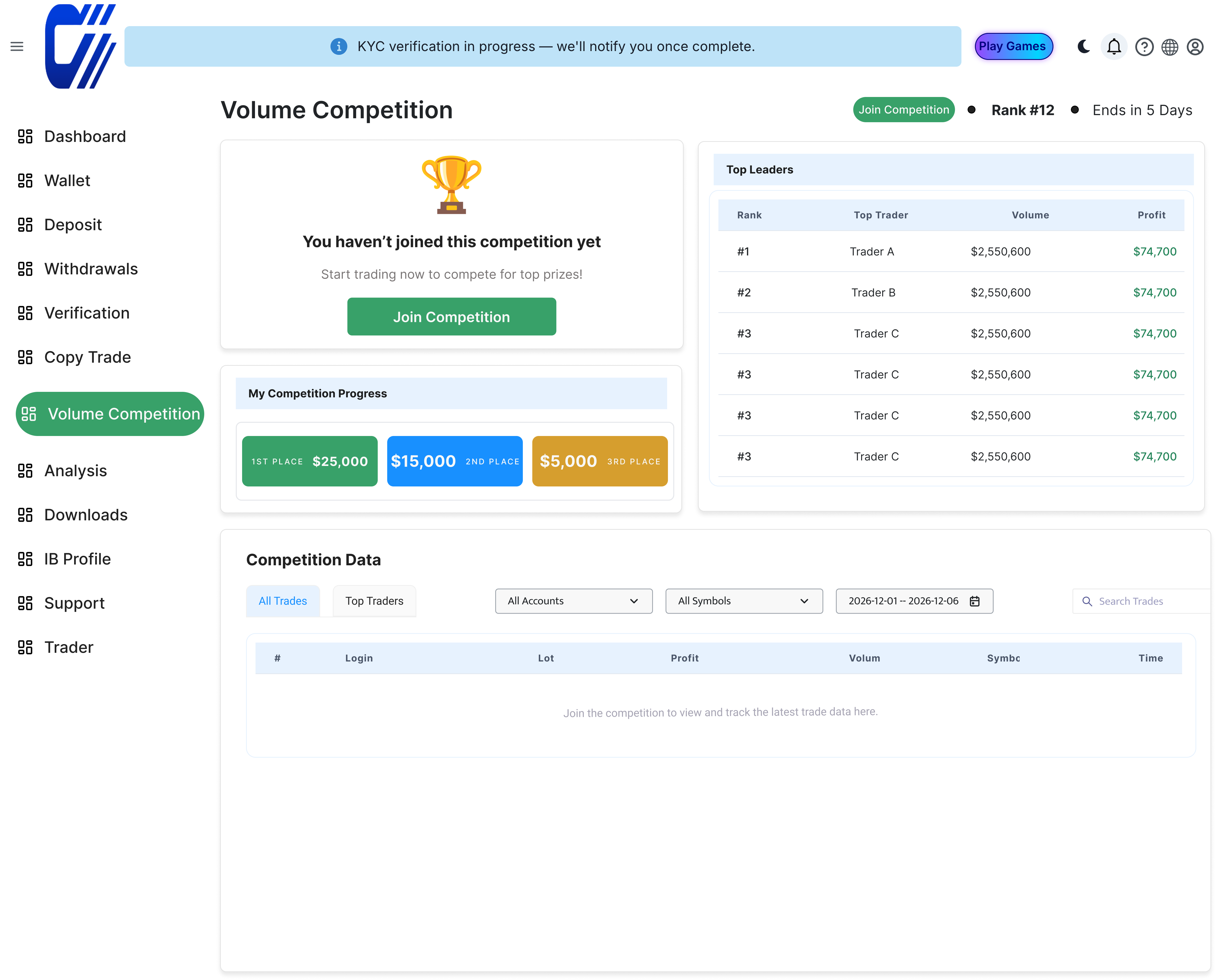
Scaling Trading Competitions From Campaigns To Product Infrastructure
Goal
Our goal was to drive trading volume, improve retention through gamification, and increase user engagement. I designed a competition system that:
- Supports repeatable competition launches
- Adapts to different competition strategies
- Integrates natively into ClientZone
- Enables non-technical configuration via CRM
Approach
From Request to System
The initial request was to “make competitions more generic.” I reframed the problem as a system design challenge rather than redesigning individual screens, because competitions needed to work across multiple formats, different business goals, and existing ClientZone templates.
That shift made it possible to design a product layer that could support repeatable launches rather than a string of disconnected campaign experiences.
- Multiple formats
- Different business goals
- Existing ClientZone templates
System Direction
Connected Layers
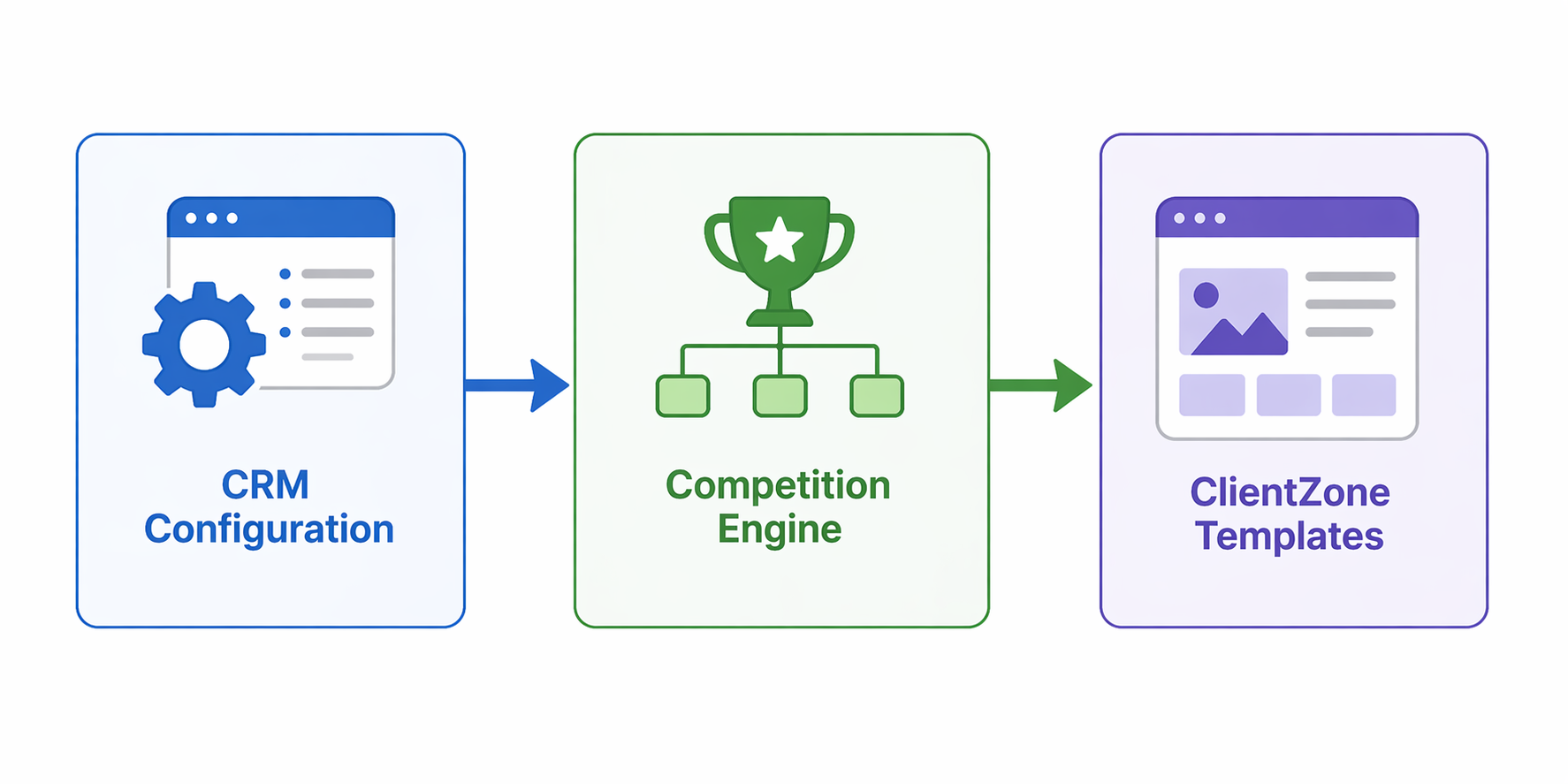
I introduced a system direction built around three connected layers:
CRM Configuration
→
Competition Engine
→
ClientZone Templates
Standardized Lifecycle
From Entry to Completion
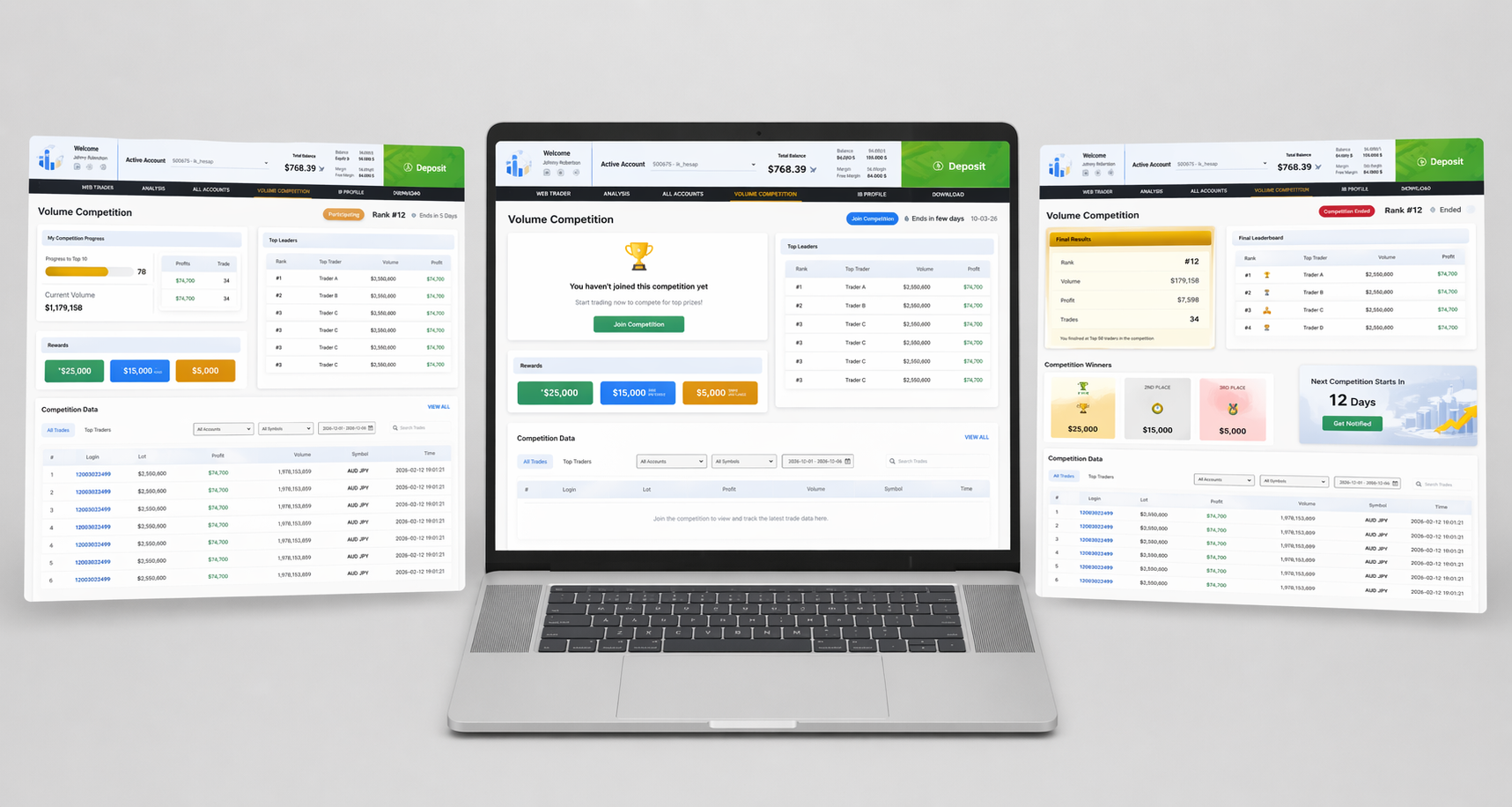
One of the early gaps was the lack of a clear competition flow, which created confusion for both users and engineering because different competitions behaved differently. To address this, I introduced a standardized lifecycle that applies across all competitions.
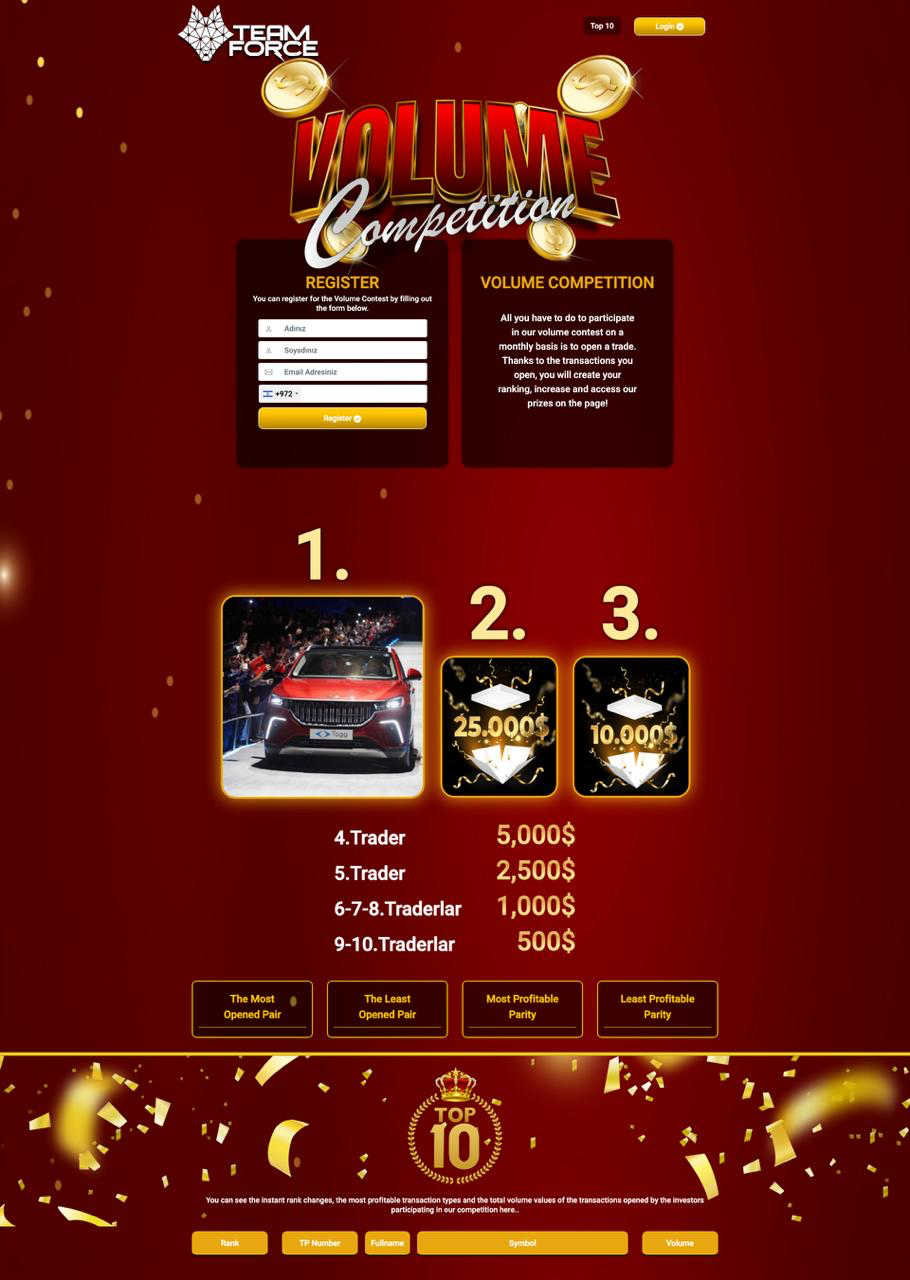
Not Joined → Participating → Competition Finished
Users always know what state they are in, UI behavior becomes predictable, and engineering logic is simplified.
Template System
Reusable Competition Templates
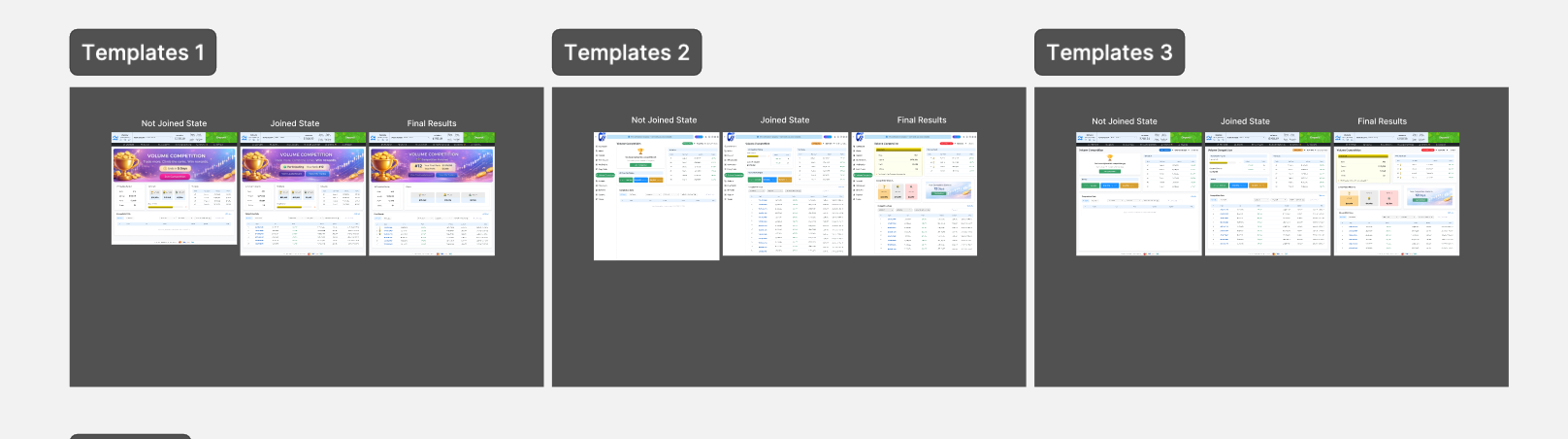
The competitions are designed to serve different purposes: performance-driven experiences, engagement-focused journeys, and marketing campaigns. A single layout could not support all of these effectively.
Forcing one solution would not scale, so I introduced a template system:
Data Template → optimized for performance tracking
Engagement Template → optimized for motivation and progress
Campaign Template → optimized for visibility and conversion
This template system allows the product to support multiple use cases without redesigning the system each time.
CRM Configuration
Admin-Controlled Setup
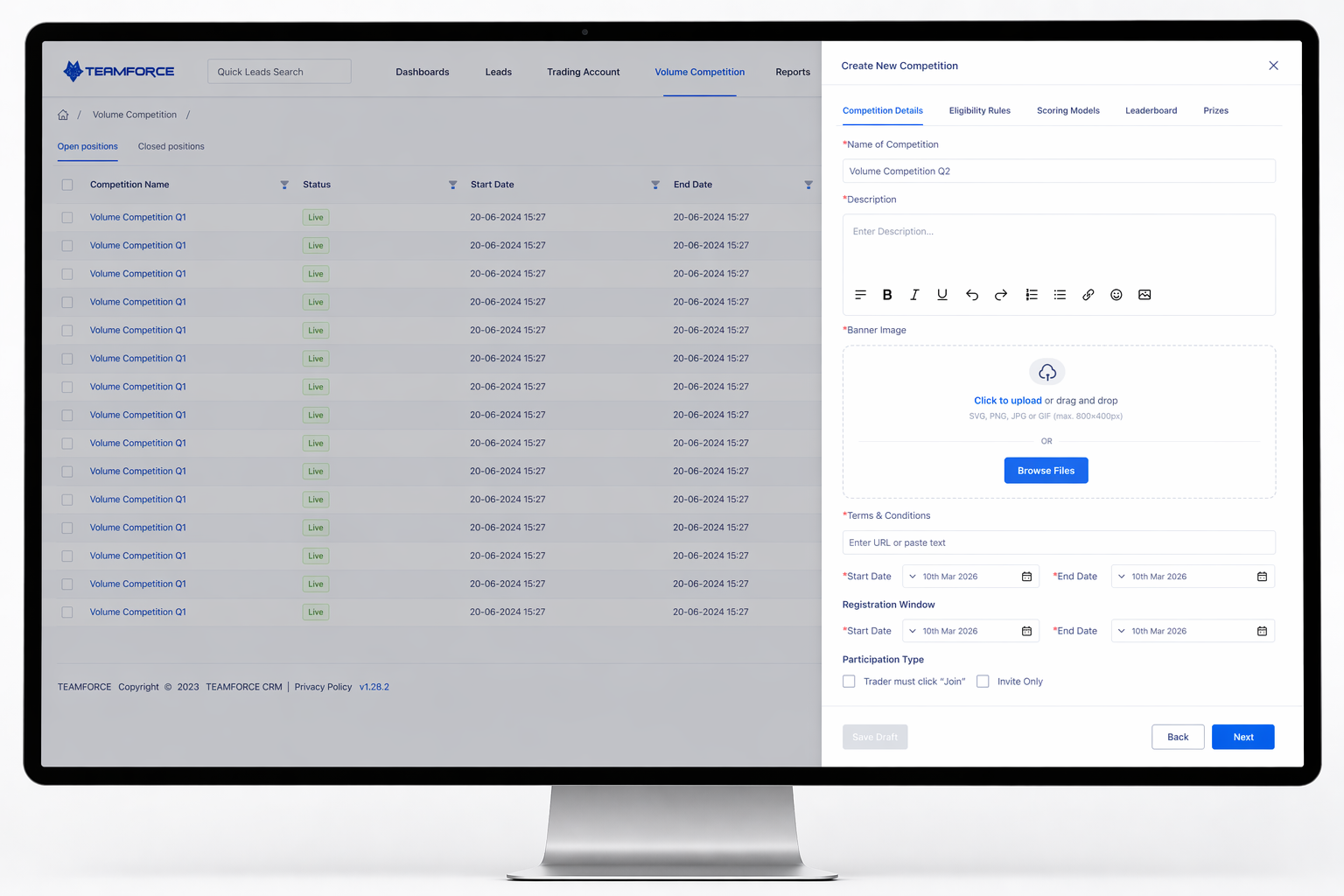
Previously, each competition required design and engineering effort, which limited how quickly the business could launch. The modular CRM configuration flow allows admins to define:
Competition identity and lifecycle
Eligibility rules
Trading scope
Scoring model
Leaderboard structure
Prize configuration
Template selection
Configure
→
Generate
→
Render
Impact
Impact for Traders and Admins
Outcomes for traders and administrators.
Traders
- Clear competition experience
- Real-time performance tracking
- Motivation through ranking and rewards
Admins
- Easy competition configuration
- Flexible rule management
- Faster campaign execution
Reflection
From Growth Idea to Product System
This work showed how growth mechanics become much more effective when they are treated as product infrastructure instead of isolated campaign assets. The most important design move was not a screen-level refresh, but a structural system that could scale.
By introducing templates, lifecycle consistency, and CRM-based configuration, the competition experience became easier to launch, easier to understand, and more useful across the business.